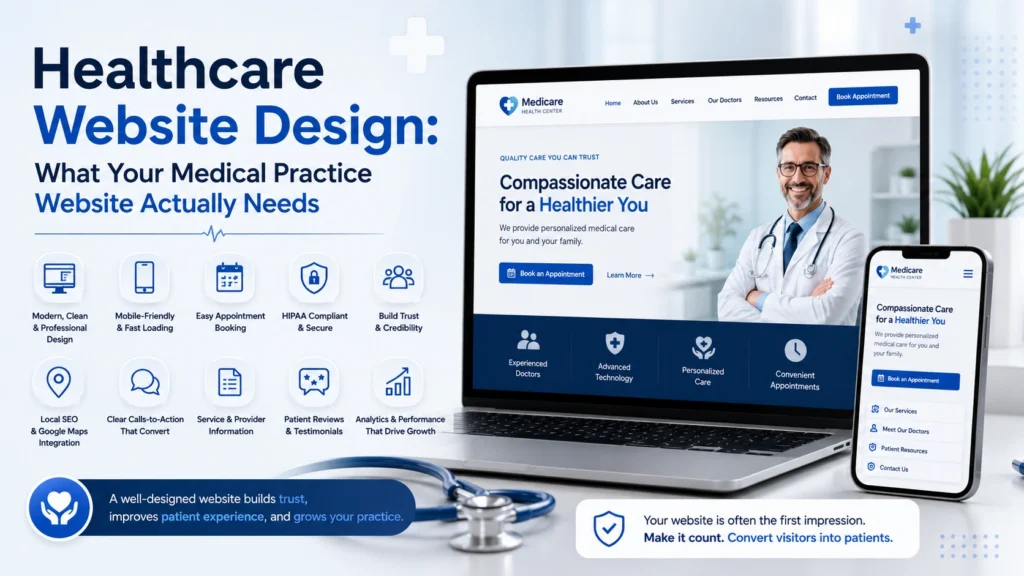
For many patients, a medical practice website is the first impression they have of a clinic. Before calling, booking, or visiting, they may look for basic information: what the practice does, where it is located, which services are offered, and whether the clinic feels trustworthy.
That makes healthcare website design more than a visual exercise. A medical website should communicate credibility, make important information easy to find, work well on mobile devices, and guide visitors toward the next step. For independent medical clinics, the website also needs to support local visibility and marketing campaigns.
1. A Clear Message Above the Fold
The first screen should immediately answer three questions: Who are you? What do you offer? Where do you serve?
A strong medical practice homepage can make the clinic, specialty or primary care offering, location, and primary call-to-action obvious without forcing visitors to scroll. A headline such as “Primary Care for Families in Rancho Cucamonga” is more useful than a generic statement such as “Welcome to Our Practice.”
The goal is clarity. Patients should not have to decode the website to understand why they should contact the practice.
[ inline image 16:9 — annotated homepage: phone, CTA, services, trust, location ]2. Easy Appointment and Contact Options
A website should make contacting the practice simple. Important contact information should be easy to find, especially on mobile.
Useful elements can include a prominent appointment-request button, click-to-call phone number, contact form, office address, hours, and directions. If the practice uses an online scheduling or patient portal system, the website should make the appropriate pathway easy to understand.
3. Service Pages That Answer Patient Questions
A single services page is often not enough. Important services can have dedicated pages that explain what the service is, who may benefit from it, what patients can expect, and how to contact the practice.
Dedicated pages also give search engines clearer context about what the clinic offers. This creates opportunities to connect the website’s content with relevant searches without stuffing keywords unnaturally.
4. Mobile-First Usability
Patients frequently browse on phones. A medical website should therefore be easy to read and navigate on a small screen.
Buttons should be easy to tap, text should be readable, important information should not be buried, and pages should load efficiently. The mobile experience should not feel like a reduced version of the desktop site.
[ inline image 4:3 — mobile appointment/contact flow ]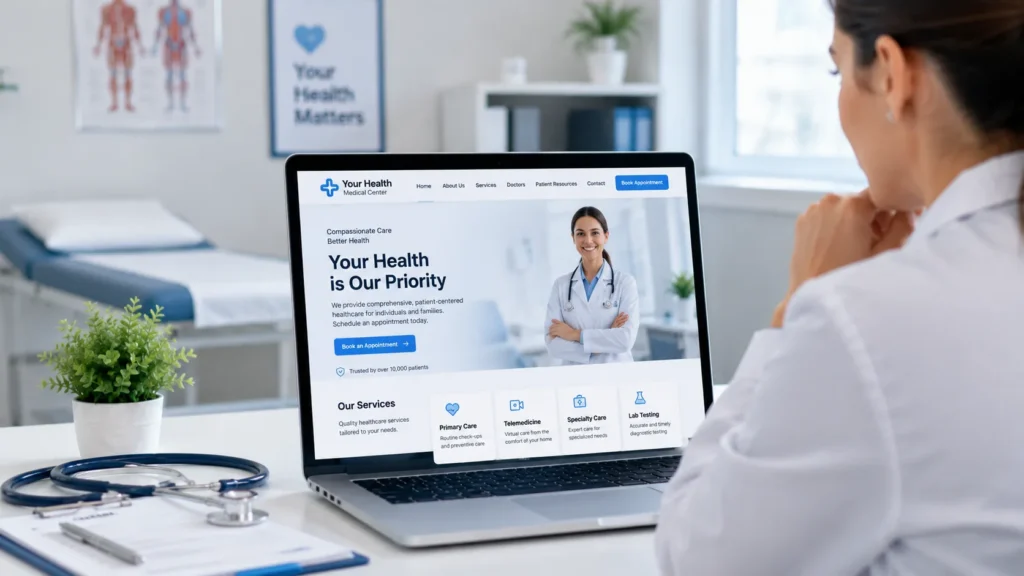
5. Trust-Building Content
Healthcare decisions are personal. A professional website can reduce uncertainty by clearly presenting provider information, services, office photographs, accepted insurance information when applicable, patient resources, and other accurate practice details.
Real photographs and authentic information can help the website feel like a representation of the actual clinic rather than a generic template.
6. Local Information
For a local medical practice, location matters. The website should clearly communicate the communities the clinic serves and provide consistent business information.
A location-focused website structure can support local search efforts for doctors, especially when combined with an optimized Google Business Profile and appropriate local landing pages.
7. Built for Marketing, Not Just Information
A website should be ready to support Google Ads, Meta Ads, SEO, social media, and other campaigns. Each marketing channel sends visitors to a destination, and the destination should make the next action obvious.
For example, a paid search campaign promoting a specific service should ideally send visitors to a relevant service page rather than a generic homepage. This can make the experience more consistent and reduce friction.
8. Measurement and Conversion Tracking
Marketing becomes easier to improve when important actions can be measured. Depending on the clinic’s setup, useful conversions may include appointment-request submissions, contact-form submissions, phone clicks, or other defined lead actions.
Tracking helps the practice understand which pages and campaigns are generating meaningful engagement.
Conclusion
The best healthcare website design combines professional presentation, useful information, local relevance, mobile usability, and a clear path to contact the practice. It should also be built as the foundation for the clinic’s broader marketing strategy.
For independent medical clinics in the Inland Empire, the website can become the central destination connecting SEO, Google Ads, Meta Ads, referrals, and social media.
Ready to improve your medical practice website?
Explore Pacific Digital’s healthcare website design services for medical clinics in the Inland Empire.
See Website Design Services ← All articles Next: 10 conversion features →